proDUCKtive
Improving library study experiences through movement and healthy breaks.
Extended sedentary study is doing real damage.
Extended sedentary behaviour is linked to reduced cognitive function and memory, and through that to study effectiveness. Students want active, engaging breaks but default to passive phone scrolling because no appealing alternative exists in the study environment.
People like the feeling of accountability when studying with friends, but struggle with maintaining focus as a group because social interaction overrides structured study time.
Students want to get up to stretch or get water to improve productivity and take care of their body, but fear breaking their concentration by losing track of time.
Some students want to get up and know they should for their health when taking breaks, but don’t because they don’t know what to do during that time and feel awkward
rarely take breaks during intense study, often seated up to three hours
check social media during study breaks
show poor break quality
From our survey of 30 Imperial students, alongside 30 intercept interviews and six in-depth sessions.
“I try not to get up because if I do I will get distracted talking to people.”
Undergraduate, first year
“Scrolling during short breaks leaves me feeling unrested and unproductive.”
Physics, year 1
The question we settled on
How might we encourage intentional movement during study breaks in the library to improve student wellbeing without disrupting focus?
The design
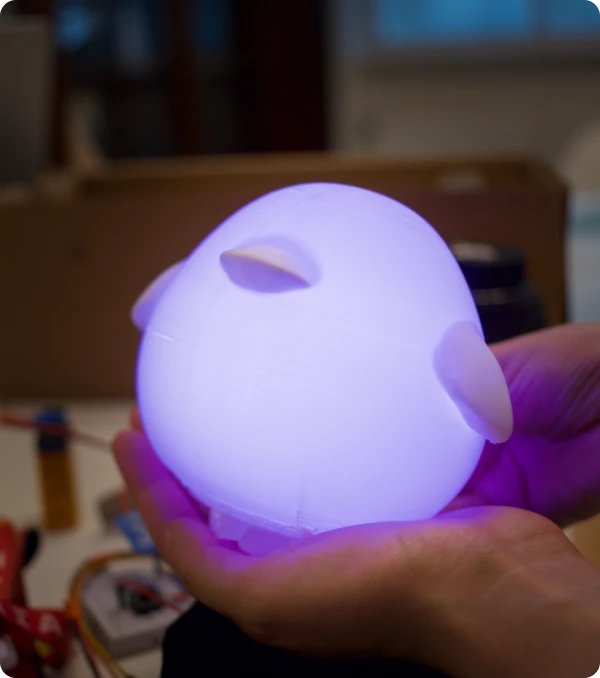
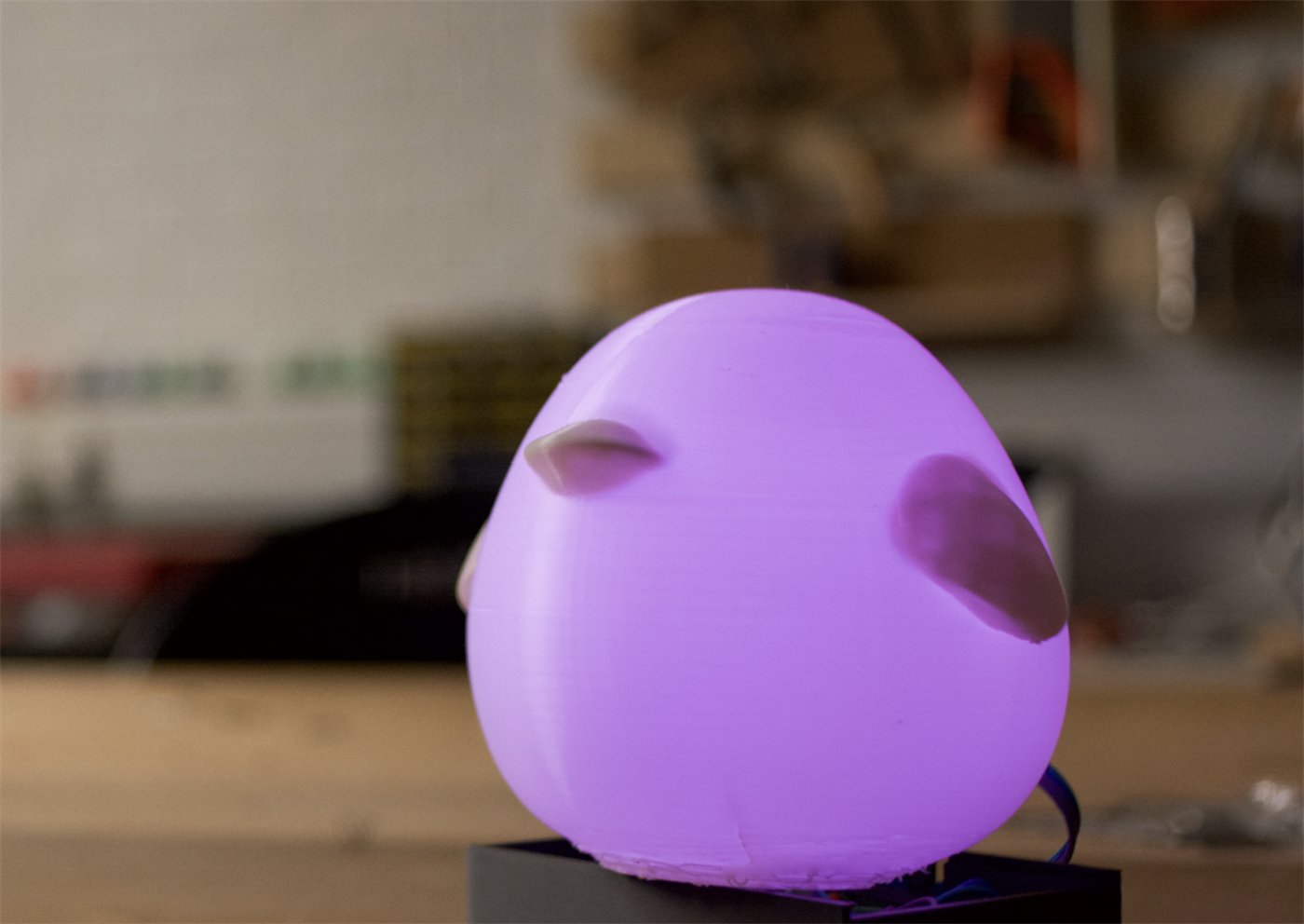
An LED duck lamp that gradually changes colour with time to gently prompt a short break, synced with friends. To turn it back to normal it has to detect movement for a set duration. The cute form factor was chosen for good light diffusion, and because a companion is something students said they would want to take care of.
Light and haptics carry every state
A combination of an RGB LED ring and a mini vibration motor gives both visual and haptic information to the user, keeping outputs simple but versatile. A variety of animation styles alongside real-time vibration feedback provides intuitive cues, without disrupting focus.
HugMode syncs friends by proximity
An NFC chip recognises a student’s friend’s duck, allowing the two to sync their break times. The ducks use the ESP’s onboard WiFi with an MQTT protocol to share their remaining break time via a centralised server, and the lower time is adopted. Friends can study further apart from one another, reducing distraction while still benefiting from social accountability.
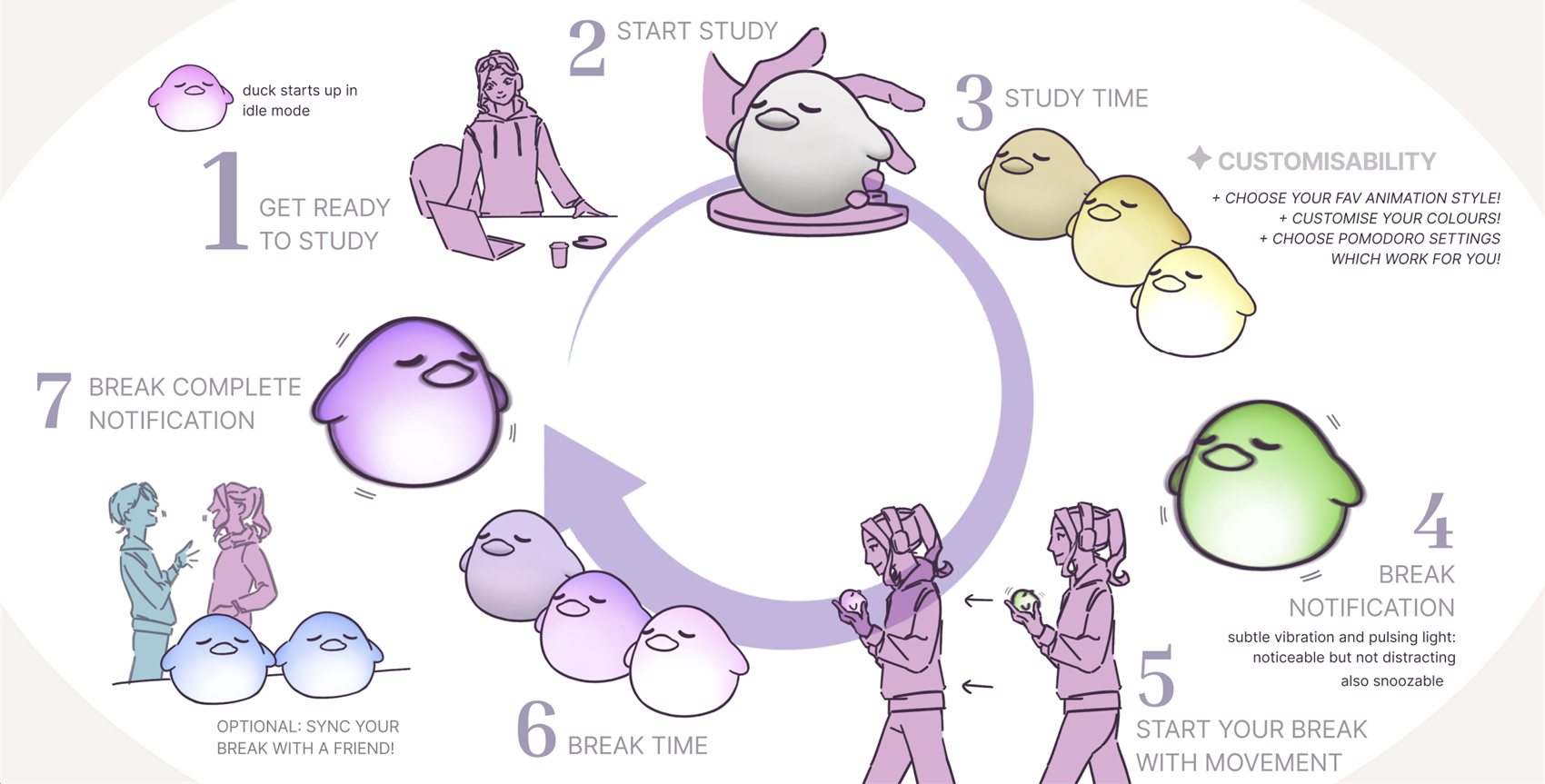
How the design meets what users need
Users need a physical product which can stand alone from digital devices during its use, with simple, intuitive inputs that promote active breaks and prevent digital distraction.
Design validation
We returned to early user testers for a full final round. They were asked to study as they normally would, using the duck to time active breaks every twenty minutes. The combination of a physical device and a dedicated break activity discouraged phone usage entirely during the session. Users rated it 5/5 for being lightweight and portable, and 5/5 for promoting timely, engaging breaks.
“It makes me feel less guilty for taking breaks.”
Final design test participant
While the size is right, the material finish needs improvement: users indicated that making the casing squishy would significantly elevate the tactile experience. A custom manufactured PCB would be small enough to fit inside the small duck, allowing for a complete works-like and looks-like device.
Team project: Charlotte Own, Prisha Singh, Tomás Markey, Oliver Visram and Raphaelle Vasseux.